
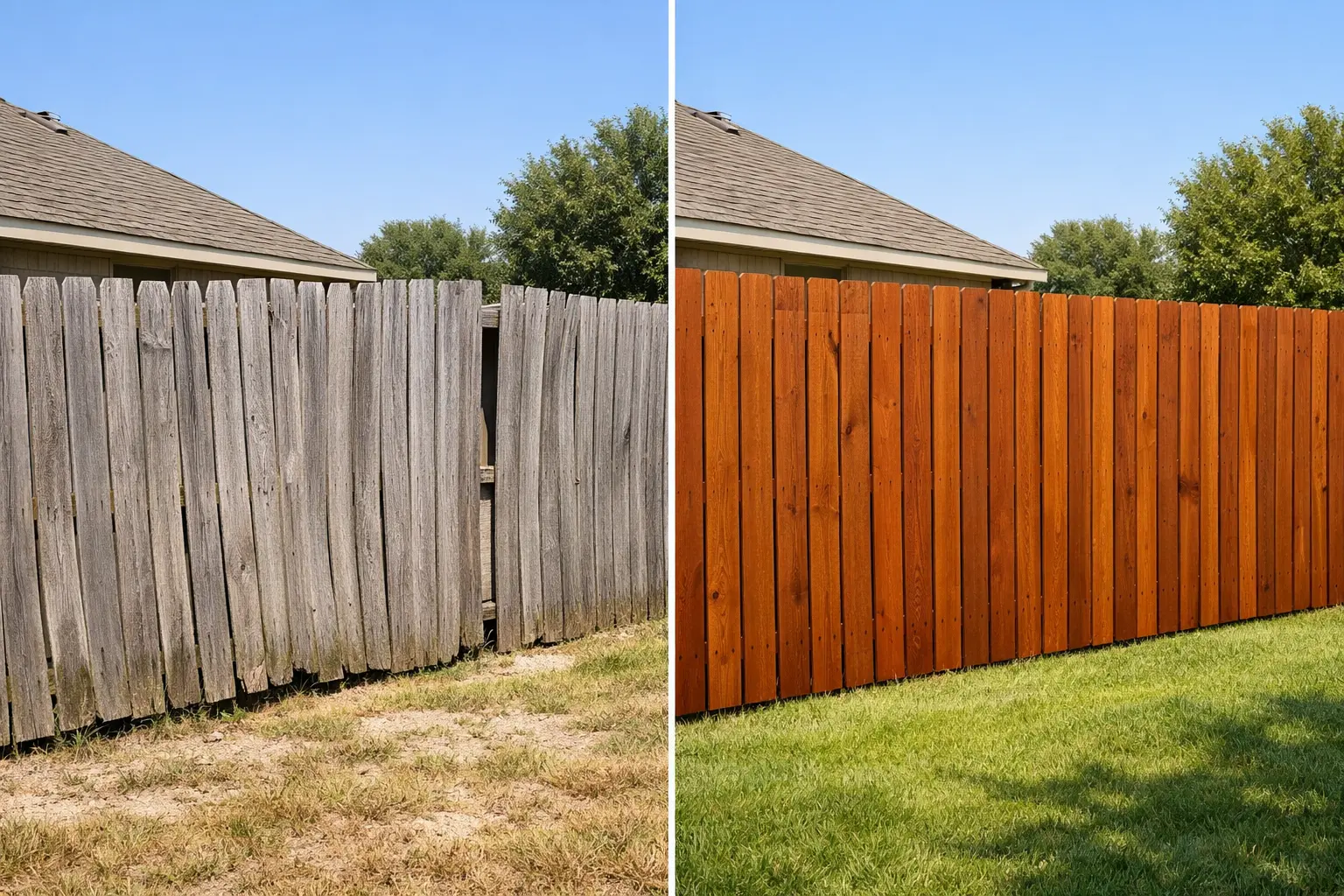
A well-maintained wood fence in Houston lasts 15-20 years. A neglected one might only last 8-10. The difference is basic maintenance: keeping it clean, sealed, and addressing small problems before they become big ones.
Houston’s climate is particularly hard on wood fences. The combination of intense sun, high humidity, heavy rains, and clay soil that shifts with moisture creates challenges you do not face in other parts of the country.
Annual maintenance checklist
Spring (March-April) – Best time for annual inspection:
- Walk the entire fence line looking for damage
- Check posts for rot at ground level (push test)
- Look for loose or missing pickets
- Inspect gates for sagging or hardware issues
- Check for leaning sections
- Clear vegetation touching the fence
Cleaning your fence
Houston humidity encourages mold, mildew, and algae growth. Green or black discoloration is not just ugly – it breaks down wood fibers over time.
Cleaning options:
- Garden hose + brush: Good for light dirt. Safe and easy.
- Oxygen bleach solution: Effective for mold/mildew. Mix per directions, apply, wait 15 min, rinse.
- Pressure washer: Use LOW pressure (under 1500 PSI). High pressure damages wood grain. Keep nozzle 12+ inches away.
Staining and sealing
Stain/sealer protects wood from UV damage, moisture, and insects. In Houston’s climate, plan to restain every 2-3 years.
When to stain:
- New pressure-treated fence: Wait 3-6 months for wood to dry out
- New cedar fence: Can stain immediately or let weather naturally
- Existing fence: When water stops beading on surface
- Best seasons: Fall or early spring. Avoid summer heat (stain dries too fast) and humid periods.
Common problems to watch for
Post rot at ground level
The most serious problem. Posts rot where they meet the ground because that area stays damp. Push on posts – if they move, the base is likely rotted. Catching this early means replacing one post instead of rebuilding sections.
Warped or cupped pickets
Sun exposure causes uneven drying, which warps wood. Minor warping is cosmetic. Severe warping creates gaps and weakens attachments. Replace badly warped pickets.
Leaning sections
Usually caused by post failure or soil movement. Houston clay soil expands when wet and contracts when dry, putting stress on posts. Address leaning early before it cascades to other sections.
Gate problems
Gates get the most use and the most problems. Sagging, sticking, and hardware failure are common. Often fixable by adjusting hinges, adding support, or replacing hardware.
Frequently asked questions
How often should I stain my fence in Houston?
Every 2-3 years for most stains. Semi-transparent stains may need refreshing more often. Solid stains last longer but show peeling when they fail.
Is it worth maintaining an old fence?
If the posts are solid and the structure is sound, yes. Replacing pickets and staining costs far less than a new fence. If posts are failing throughout, replacement makes more sense.
Should I trim plants away from my fence?
Yes. Vegetation holds moisture against the fence and can accelerate rot. Keep plants at least 6 inches away. Trim vines that climb fences – they trap moisture and their roots damage wood.
Need maintenance help?
We offer fence repair and can assess whether your fence needs minor repairs or more significant work. Sometimes a few hundred dollars in repairs extends fence life by years.