
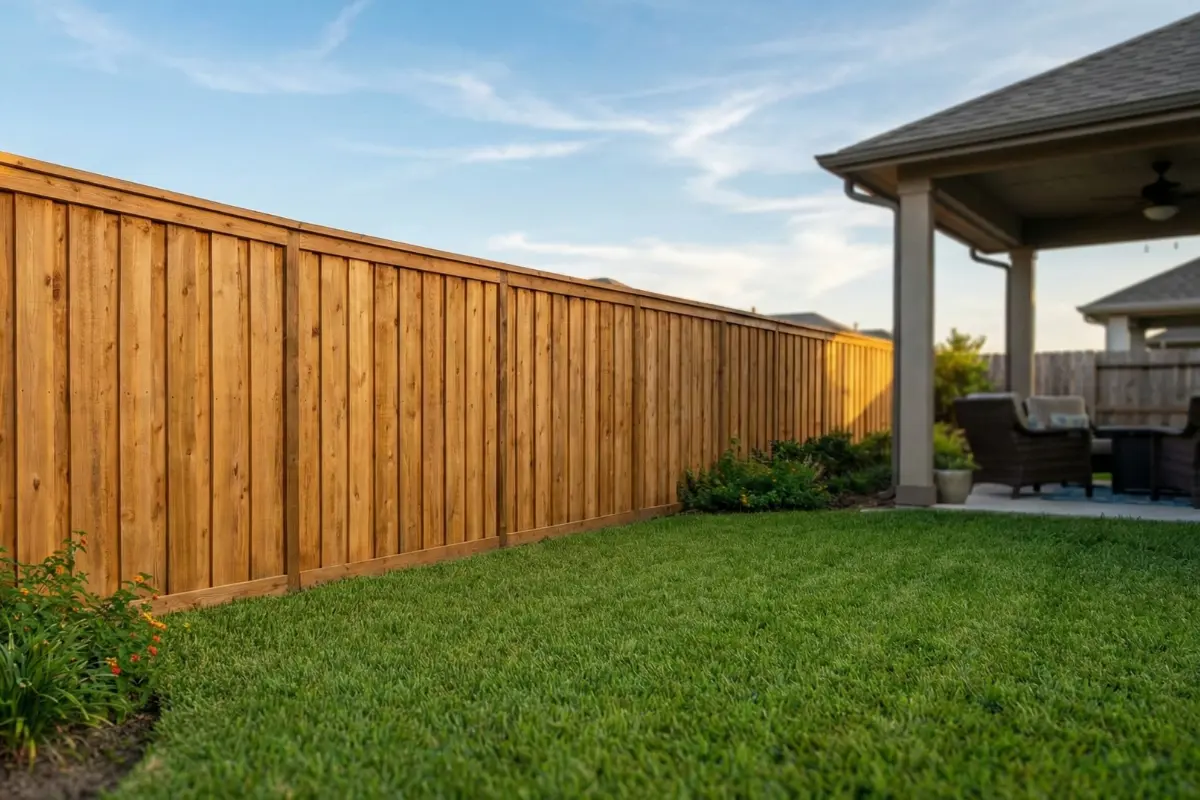
If you’re planning fence installation in Katy, TX, you probably have a lot of questions. How much will it cost? What kind of wood holds up in this heat? Will my HOA approve it? And honestly, how do you even know if a fence contractor is any good?
We get these questions every week from Katy homeowners. This guide covers everything you need to know before starting your fence project, from realistic costs to the specific challenges that come with building fences in this part of Texas.
Why Katy homeowners are building new fences right now
Katy has changed a lot over the past few years. New neighborhoods are still going up, property values have climbed, and more families are moving in. A solid fence isn’t just about privacy anymore — it’s about making your backyard usable.
Here’s what we’re hearing from homeowners:
- Kids and pets need a safe space. With backyards getting smaller in newer subdivisions, a good fence makes that space actually functional.
- The old fence is falling apart. A lot of homes built in the early 2000s are hitting that 15-20 year mark where the original fence just can’t hold up anymore.
- Pool installations require fencing. If you’re putting in a pool, you’ll need a fence that meets code.
- It’s time to actually enjoy the backyard. After spending more time at home, a lot of families are finally investing in outdoor space.
The Katy-specific challenges you should know about
Building a fence in Katy isn’t quite the same as building one in other parts of Texas. A few things make this area unique.
Clay soil that shifts
Katy sits on heavy clay soil. When it rains, the ground expands. When it dries out, it contracts. This constant movement is tough on fence posts. If they’re not set deep enough — or if the concrete footing isn’t done right, posts start leaning within a few years.
This is actually one of the biggest reasons we see fences fail early in this area. The fence itself might be fine, but the posts weren’t installed properly for Katy’s soil conditions.
Heat and humidity
Houston-area humidity is hard on wood. Without proper treatment, moisture gets into the wood fibers and causes rot. The summer heat adds UV damage on top of that. These two factors combined mean you need to think carefully about what type of wood you choose.
HOA requirements
Most Katy neighborhoods, especially the newer ones like Cinco Ranch, Cross Creek Ranch, Cane Island, and Firethorne, have HOAs with specific fence rules. These typically cover:
- Maximum height (usually 6 feet for backyard, 4 feet for front)
- Approved fence styles (board-on-board and shadowbox are common)
- Approved stain colors (natural wood tones, no bright colors)
- Setback from property lines
- “Good neighbor” requirements (the finished side facing out)
Before you sign any contract, make sure your fence company knows how to work with your specific HOA. The last thing you want is to build a fence and then have to modify it because it doesn’t meet requirements.
Learn more about our privacy fence options
What type of wood works best in Katy?
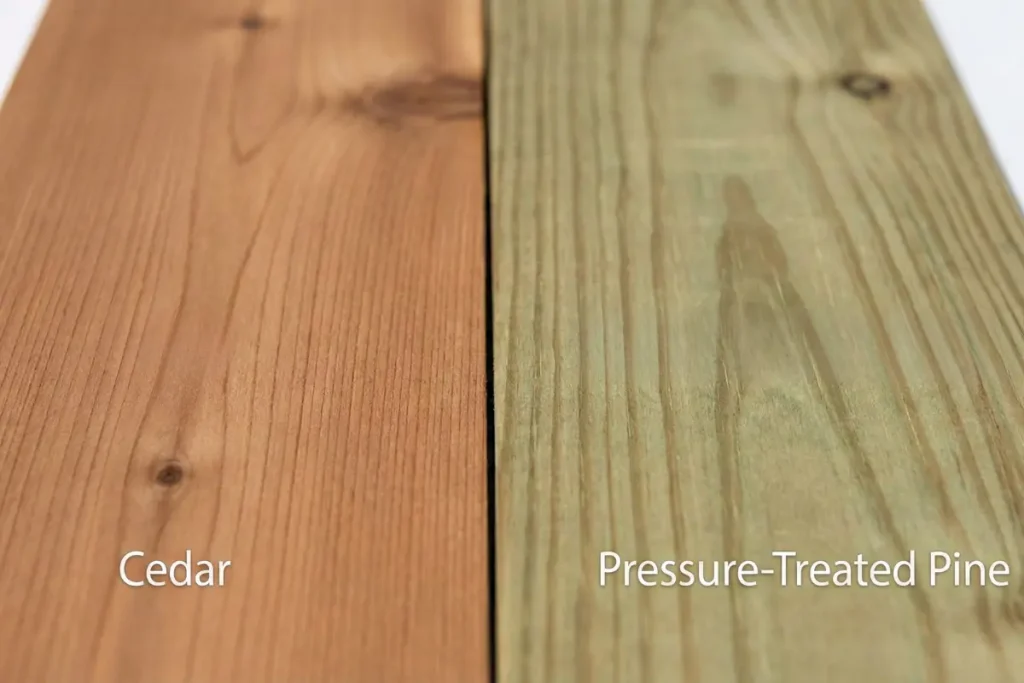
You’ll typically choose between two options: cedar and pressure-treated pine. Both can work well here, but they have different strengths.
Cedar
Cedar has natural oils that resist rot and insects. It also has a richer color and grain pattern that a lot of homeowners prefer. The downside? It costs more — typically 20-30% higher than pressure-treated pine.
Cedar is a good choice if appearance matters to you and you’re willing to invest a bit more upfront. It weathers to a silver-gray over time if left unstained, or you can stain it to maintain the original color.
Pressure-treated pine
Pressure-treated pine is chemically treated to resist rot and insects. It’s more affordable than cedar and holds up well in our climate when installed correctly. Most fences in Katy are built with pressure-treated pine.
The main thing to know: pressure-treated wood needs time to dry before you stain it. If you stain too soon, the stain won’t penetrate properly. Most contractors recommend waiting 3-6 months after installation before applying stain.
See our wood fence installation services
How much does a fence cost in Katy?
This is the question everyone asks first. Here’s what you can realistically expect to pay in the Katy area:
| Fence Type | Cost per Linear Foot (Installed) |
|---|---|
| 6-foot privacy fence (pine) | $25–$35 |
| 6-foot privacy fence (cedar) | $35–$45 |
| 8-foot privacy fence | $40–$55 |
| Single walk gate | $200–$400 |
| Double drive gate | $500–$900 |
What does this look like for a typical Katy yard?
A 150 linear foot fence (common for a standard lot) with pressure-treated pine and one walk gate would run roughly $4,000-$5,500. Cedar would push that to $5,500-$7,000.
What affects the price?
A few things can push your cost up or down:
- Terrain: Sloped yards require more labor and sometimes stepped panels
- Removal: Tearing out an old fence adds $2-$5 per linear foot
- Access: If materials have to be carried a long distance, that adds labor time
- Style: Board-on-board uses more pickets than shadowbox, so it costs a bit more
- Gates: Custom gates or double drive gates are priced separately
What to expect during fence installation in Katy, TX
A fence installation in Katy typically takes 1-2 days for most residential projects. Here’s how it usually goes:
Day 1: The crew marks the layout, digs post holes, sets posts in concrete, and lets them cure. Post depth matters — in Katy’s clay soil, posts should be set at least 24-30 inches deep with proper concrete footings.
Day 2: Rails are attached and pickets are installed. Gates go in last. The crew cleans up and does a final walkthrough with you.
For larger properties or complex designs, the project might take 3-4 days. Your contractor should give you a realistic timeline upfront.
How to choose the right fence company in Katy
There are a lot of fence contractors working in the Katy area. Some are excellent. Some… aren’t. Here’s how to tell the difference:
Ask these questions before you hire
1. How deep do you set posts?
If they say less than 24 inches, keep looking. Katy’s clay soil needs deeper posts to prevent leaning.
2. Do you handle HOA approval?
A good contractor will help you prepare the application and know what your HOA requires.
3. What’s included in the quote?
Get specifics: materials, labor, removal of old fence, cleanup. Vague quotes lead to surprise charges.
4. Do you offer a warranty?
Workmanship warranties protect you if something goes wrong. Make sure you understand what’s covered.
5. Are you licensed and insured?
This protects you if there’s an accident on your property during installation.
Red flags to watch for
- Asking for full payment upfront (a deposit is normal, full payment isn’t)
- No written contract or vague quote
- Can’t provide local references
- Price that seems too good to be true (it usually is)
- Pressure to sign immediately
Katy neighborhoods we serve
We install fences throughout the Katy area, including:
- Cinco Ranch
- Cross Creek Ranch
- Cane Island
- Firethorne
- Elyson
- Tamarron
- Grand Lakes
- Kelliwood
Don’t see your neighborhood? We probably serve it. Just reach out and let us know where you’re located.
Frequently asked questions about Katy fence installation
Do I need a permit to build a fence in Katy?
Most standard backyard fences in Katy don’t require a city permit. However, fences over 8 feet tall or in front yards may need approval. More importantly, most Katy neighborhoods require HOA approval before you start. Your contractor should help you navigate this process.
How long does fence installation take?
Most residential fences in Katy are completed in 1-2 days. Larger projects or custom designs may take 3-4 days. Weather can also affect the timeline — we don’t pour concrete footings in heavy rain.
How long will my new fence last?
A well-built fence in Katy should last 15-20 years with proper maintenance. The key factors are quality materials, proper post depth, and occasional staining or sealing to protect against moisture and UV damage.
When is the best time to install a fence in Katy?
You can install a fence year-round in this area. Spring and fall are popular because of milder temperatures. Summer works fine too — we just start early to beat the heat. Winter is actually a good time since many contractors have more availability.
Should I stain my fence right after installation?
If you’re using pressure-treated pine, wait 3-6 months before staining. The wood needs time to dry out from the treatment process. Cedar can be stained sooner, but checking with your contractor about timing is always a good idea.
Ready to start your fence project?
If you’re planning a fence installation in Katy, we’re happy to answer your questions and provide a detailed quote. We know the area, we know the HOA requirements, and we build fences that hold up in this climate.
Fill out our contact form and we’ll get back to you within 24 hours with a free estimate.