
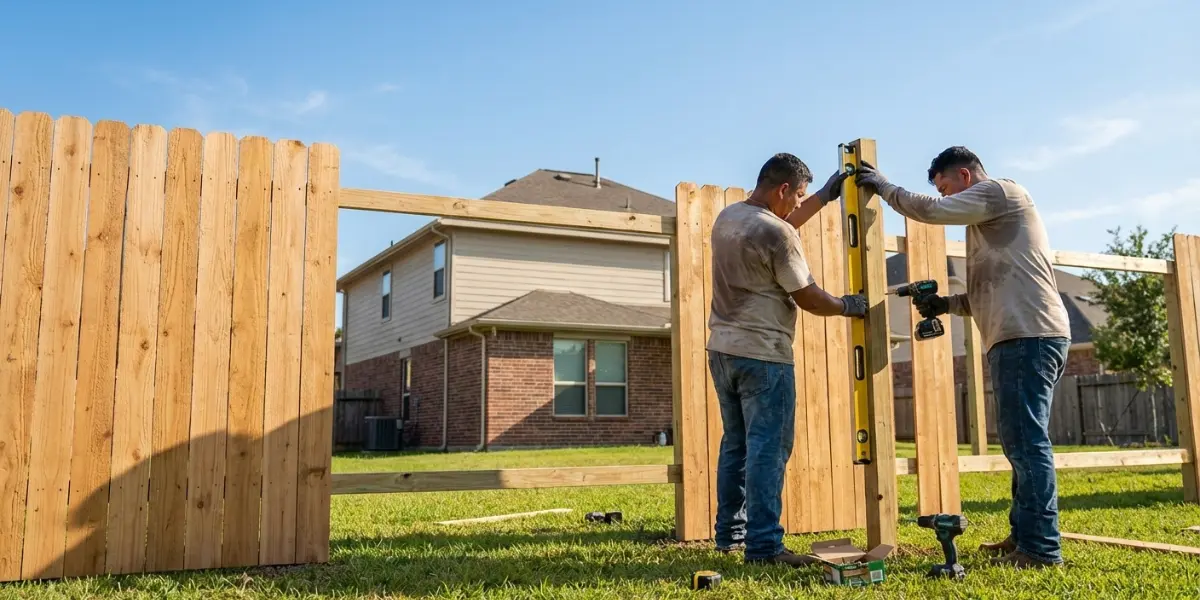
A new wood privacy fence in Houston typically costs $25 to $45 per linear foot, fully installed. For a standard backyard with 150-200 linear feet of fencing, that works out to roughly $4,000 to $8,000 total. The wide range depends on your wood choice, fence style, lot conditions, and the contractor you hire.
If you’re trying to budget for a fence project, this guide gives you real numbers — not vague ranges that don’t help. We’ll break down what affects pricing so you can estimate your specific project more accurately.
The quick answer: What fences actually cost
Here’s what Houston homeowners are paying in 2026 for professionally installed wood privacy fences:
| Fence type | Cost per linear foot (installed) |
| 6-ft privacy fence (pressure-treated pine) | $25-$35 |
| 6-ft privacy fence (cedar) | $35-$45 |
| 8-ft privacy fence | $40-$55 |
| Board-on-board with cap & trim | $40-$50 |
| 4-ft ornamental/picket fence | $20-$30 |
Gates are priced separately:
| Gate type | Typical cost |
| Standard walk gate (3-4 ft) | $200-$400 |
| Double drive gate (10-12 ft) | $500-$900 |
| Sliding gate (manual) | $800-$1,500 |
Real-world examples: What actual projects cost
Numbers per linear foot are helpful, but here’s what complete fence projects actually look like in different Houston neighborhoods:
Example 1: Standard suburban lot (Cypress)
- Lot size: 60 x 120 ft
- Fence needed: 180 linear feet (back and both sides)
- Style: 6-ft board-on-board, pressure-treated pine
- Gates: One walk gate
- Terrain: Flat, easy access
Total cost: $5,400-$6,600
Example 2: Larger lot with cedar (Katy)
- Lot size: 70 x 140 ft
- Fence needed: 220 linear feet
- Style: 6-ft board-on-board, cedar
- Gates: One walk gate, one double drive gate
- Terrain: Slight slope on one side
Total cost: $9,500-$11,500
Example 3: Smaller townhome lot (Spring)
- Lot size: 40 x 90 ft
- Fence needed: 100 linear feet (back and partial sides)
- Style: 6-ft shadowbox, pressure-treated pine
- Gates: One walk gate
- Terrain: Flat
Total cost: $3,200-$4,000
Example 4: Premium fence (The Woodlands)
- Lot size: 80 x 150 ft
- Fence needed: 250 linear feet
- Style: 6-ft board-on-board with cap & trim, cedar
- Gates: Two walk gates, one double drive gate
- Terrain: Wooded, work around tree roots
Total cost: $13,000-$16,000
What affects your fence cost in Houston area?
The difference between a $4,000 fence and an $8,000 fence usually comes down to these factors:
1. Wood type
This is the biggest cost variable. Cedar runs 20-30% more than pressure-treated pine. For a 200 linear foot fence, choosing cedar over pine adds roughly $1,500-$2,500 to your project.
[INTERNAL LINK: See our cedar vs. pine comparison →]
2. Fence style
Board-on-board uses more pickets than shadowbox or side-by-side styles, so it costs a bit more. Adding a cap board (the horizontal piece along the top) and trim work increases the price further but gives you a more finished look.
3. Height
Most residential fences are 6 feet tall. Going to 8 feet adds roughly 30-40% to the cost — more material, taller posts that need deeper holes, and more labor. Some HOAs don’t allow 8-foot fences, so check before you plan for it.
4. Terrain and access
Flat lots with good access are straightforward. Slopes require stepped or racked panels, which take more time. Limited access (materials carried long distances, tight spaces, landscaping in the way) adds labor hours. Tree roots in the fence line can complicate post placement.
5. Old fence removal
If you have an existing fence that needs to come down, expect to add $2-$5 per linear foot for removal and disposal. A 200-foot fence removal runs $400-$1,000 depending on the fence type and condition.
6. Number and type of gates
Gates are priced separately because they require more hardware, more precise construction, and more labor. A fence with three gates costs noticeably more than one with a single gate.
Why quotes vary so much between contractors
It’s not unusual to get three quotes and see a $2,000 difference between the lowest and highest. That gap usually reflects real differences in what you’re getting:
- Post depth and concrete. Budget contractors sometimes set posts shallower with less concrete. This saves time but leads to leaning posts within a few years. In Houston’s clay soil, posts should be 24-30 inches deep.
- Hardware quality. Galvanized or stainless steel screws and brackets last longer than cheaper alternatives that rust.
- Wood grade. Not all pressure-treated lumber is the same. Higher grades have fewer knots, less warping, and better appearance.
- Crew experience. Experienced crews work faster without cutting corners. They also catch problems before they become expensive fixes.
- Warranty and insurance. Legitimate contractors carry liability insurance and offer workmanship warranties. These cost money, which shows up in the price.
The cheapest quote isn’t always the best value. When comparing, make sure you’re comparing the same scope of work, materials, and quality standards.
How to get accurate quotes
Before you call contractors, it helps to know what you want. Here’s what to have ready:
- Measure your fence line. Walk the property line and measure (or estimate) the total linear feet. You don’t need to be exact — contractors will measure precisely — but it helps you compare quotes.
- Decide on wood type. Cedar or pressure-treated pine? This is the biggest cost factor, so know your preference upfront.
- Know your gate needs. How many gates? Any double gates for equipment or vehicle access?
- Check your HOA requirements. Height limits, approved styles, required approval process. This prevents surprises later.
- Note any complications. Slopes, tree roots, limited access, existing fence to remove. Let contractors know upfront.
Get quotes in writing with a detailed breakdown. A good quote specifies materials, post depth, hardware, cleanup, and warranty — not just a total number.
Frequently asked questions about fence costs
Is it cheaper to build a fence yourself?
You can save 30-50% on labor by DIY, but fence building is harder than it looks — especially setting posts correctly in Houston’s clay soil. Mistakes are expensive to fix. Most homeowners find the time investment and risk of errors aren’t worth the savings.
When is the cheapest time to install a fence?
Winter (December-February) is typically slower for fence contractors, so you may find better availability and occasionally lower prices. Spring and early summer are the busiest seasons when wait times are longest.
Do I need a permit for a fence in Houston?
The City of Houston generally doesn’t require permits for standard residential fences under 8 feet. However, most subdivisions require HOA approval, which is separate from city permits. Check your neighborhood’s requirements before starting.
How long does fence installation take?
Most residential fences are installed in 1-2 days. Larger properties or complex projects may take 3-4 days. The timeline doesn’t include HOA approval, which can add 2-3 weeks before work begins.
Should I pay for the fence upfront?
A deposit (typically 25-50%) is normal and covers materials. Be cautious of contractors asking for full payment before work begins. Final payment on completion is standard practice.
Does a new fence increase home value?
A quality fence can increase curb appeal and is attractive to buyers with children or pets. It’s not a dollar-for-dollar return, but it can help sell a home faster and avoid being a negative in negotiations.
Ready to get a quote for your fence?
We install fences throughout the Houston area — Cypress, Spring, Katy, The Woodlands, and surrounding communities. We’ll measure your property, discuss your options, and give you a detailed written quote with no pressure.
Request a free estimate. We typically respond within 24 hours.