
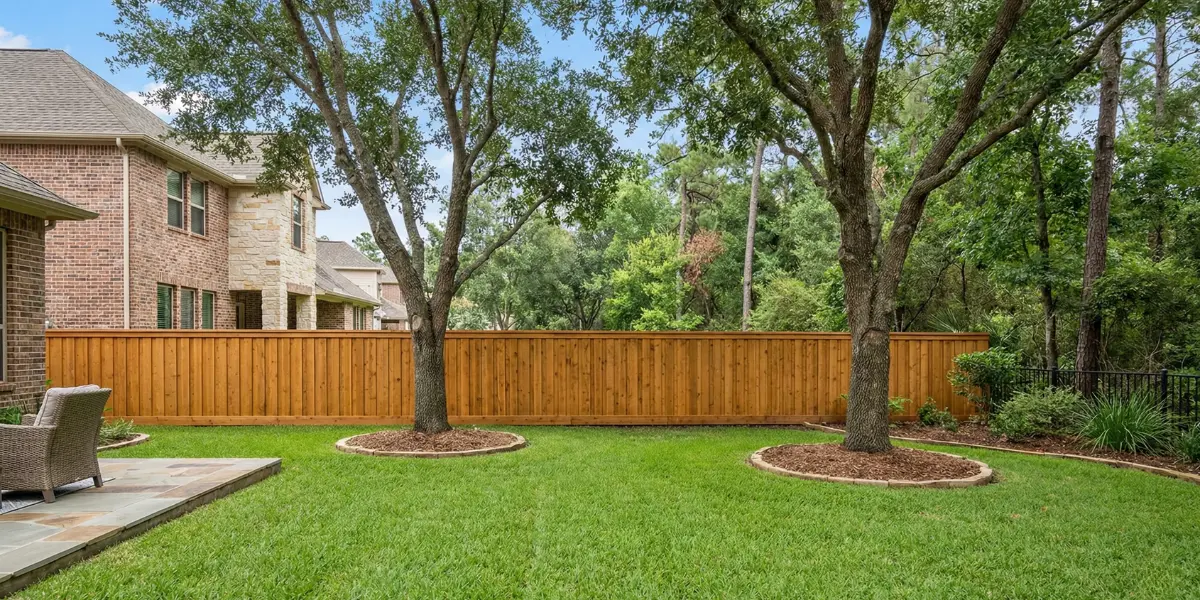
The Woodlands isn’t your typical Houston suburb. The mature trees, wildlife corridors, and strict deed restrictions that make this community beautiful also make fence installation in The Woodlands more complex than in other areas.
If you’re planning a new fence for your Woodlands home, there are several things you should understand before calling contractors. This guide covers the local regulations, practical challenges, and costs you can expect for your project.
Why fence installation in The Woodlands is different
The Woodlands was designed to blend with nature. That philosophy shows up in everything from the tree preservation rules to the way homes are set back from the street. It also affects what you can and can’t do with your fence.
Three things make this area unique:
- Deed restrictions that vary by village. What’s allowed in Creekside Park might not be allowed in Panther Creek. You need to check the rules for your specific village.
- Mature trees everywhere. Those beautiful oaks and pines have root systems that can complicate fence installation. Working around them takes experience.
The Development Standards Committee (DSC). Most fence projects need approval before you can start. It’s not difficult, but you need to plan for it.
Understanding The Woodlands deed restrictions for fences
Before you start planning your fence, you need to know what your village allows. The Woodlands Township manages deed restrictions through the Development Standards Committee, and the rules can vary from one neighborhood to the next.
Common fence requirements across The Woodlands
While specific rules vary by village, most areas share these general requirements:
- Height limits: Most villages allow up to 6 feet in the backyard. Front yard and side yard fences often have lower limits (typically 4 feet) or aren’t allowed at all.
- Approved materials: Wood is generally acceptable. Some villages have specific requirements about the type of wood or finish.
- Style requirements: Board-on-board and shadowbox are typically approved. Solid stockade-style fences may not be allowed in all areas.
- Setbacks: Fences usually can’t extend past the front plane of your home. There may also be setback requirements from property lines.
“Good side out”: The finished side of your fence typically needs to face your neighbors.
Villages with specific considerations
Different villages in The Woodlands have developed different standards over time. Here’s what we’ve noticed:
Creekside Park: One of the newer villages with more modern standards. Generally allows board-on-board and shadowbox styles. Natural wood tones preferred for staining.
Sterling Ridge: Established neighborhood with mature landscaping. Tree preservation is particularly important here. Plan for root system challenges.
Alden Bridge: Popular family neighborhood. Standard requirements apply, but there’s often more variety in approved fence styles.
Panther Creek: One of the original villages. Older homes may have existing non-conforming fences — replacement fences need to meet current standards.
Indian Springs and Cochran’s Crossing: Established areas with heavily wooded lots. Working around tree protection zones is common.
Important: Always verify your specific requirements with the DSC before finalizing plans. Rules can change, and what applied to your neighbor’s fence might not apply to yours.
The approval process
Getting DSC approval typically works like this:
- Submit your application. You’ll need a site plan showing fence location, plus details about materials, style, and height.
- Wait for review. The DSC typically responds within 2-3 weeks. Straightforward requests often get approved faster.
- Receive approval (hopefully). Once approved, you’ll have a set timeframe to complete the project.
A fence company that works regularly in The Woodlands should be able to help you with this process. Some contractors will handle the application for you; it’s worth asking about.
Learn more about our privacy fence options
Working around trees and root systems
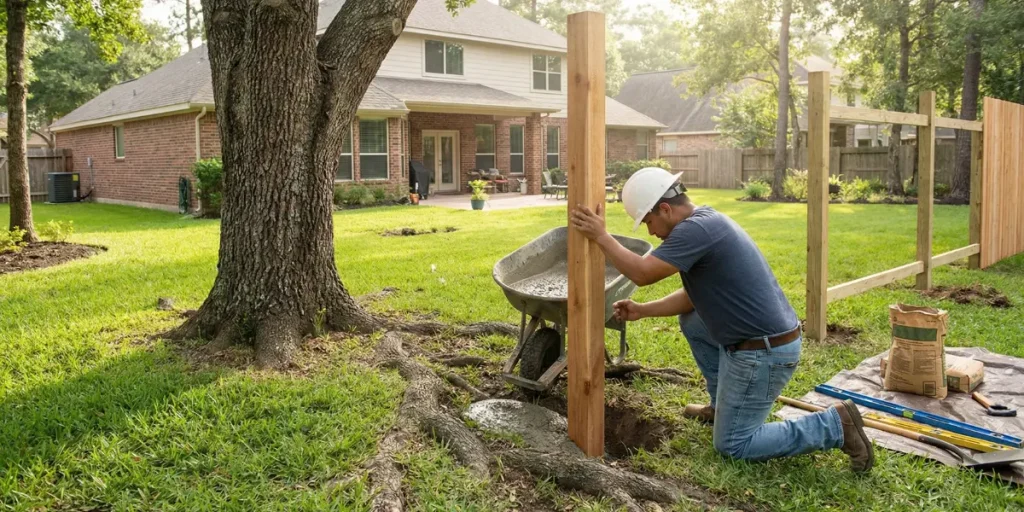
If you’ve lived in The Woodlands for any length of time, you know the trees are taken seriously here. That’s a big part of what makes the area beautiful, but it also means fence installation requires more planning.
The root zone challenge
Tree roots typically extend well beyond the canopy, often 2-3 times the width of the branches above. When you dig post holes for a fence, you’re likely to encounter roots, especially on heavily wooded lots.
Here’s what experienced contractors do:
- Adjust post locations. Sometimes shifting a post 6-12 inches avoids a major root without changing the fence layout much.
- Use smaller holes when necessary. Rather than cutting through a large root, sometimes a slightly smaller concrete footing in a different spot is the better choice.
- Work with an arborist when needed. For fences near protected trees, some villages require arborist consultation. Even when it’s not required, it’s sometimes the smart move.
Protected trees
The Woodlands has tree preservation requirements that can affect fence placement. Trees above a certain size (typically 6 inches in diameter at chest height) are often protected and require approval before any digging within their drip line.
If you have large oaks, pines, or other significant trees near your fence line, make sure your contractor knows how to work around them without causing damage. Cutting major roots can kill a tree slowly over several years, not something you want to discover later.
Best wood options for The Woodlands climate
The Woodlands gets plenty of heat, humidity, and rain, conditions that are hard on fences. Choosing the right wood fence installation materials matters.
Cedar
Western red cedar has natural oils that resist rot and insects. Many Woodlands homeowners prefer it because it looks more refined and works well with the natural aesthetic of the community. It weathers to a silver-gray if unstained, or can be stained to maintain its original reddish-brown color.
The trade-off is cost. Cedar typically runs 20-30% more than pressure-treated pine. For a typical backyard fence, that might add $1,500 or more to your project.
Pressure-treated pine
Pressure-treated pine is the more economical option and what most fences in the Houston area are built with. The wood is infused with preservatives that protect against rot, decay, and termites.
It holds up well in this climate when installed properly. The main difference from cedar is appearance — pressure-treated has a greenish tint when new and lacks the natural grain pattern that makes cedar attractive. Staining improves the look and adds extra protection.
Popular fence styles in The Woodlands
Most homeowners here choose one of these privacy fence styles:
Board-on-board: Overlapping pickets that provide complete privacy. This is the most popular choice because it looks finished from both sides and handles wood expansion and contraction well. Most DSC applications for board-on-board get approved without issues.
Shadowbox: Alternating pickets on each side create a fence that looks identical from both directions. There are small gaps that allow some airflow. Some villages specifically recommend this style for its “good neighbor” appearance.
Cap and trim: A more finished look with a horizontal cap board along the top and sometimes decorative trim. Adds to the cost but creates a more polished appearance that fits well with many Woodlands homes. If you need a custom wood gate for driveway access or a wider side yard entry, most contractors can build it to match your fence style.
How much does fence installation cost in The Woodlands?
Fence pricing in The Woodlands is similar to the broader Houston area, though some projects cost more due to the challenges we’ve discussed (tree roots, approval requirements, etc.).
| Fence type | Cost per linear foot (installed) |
| 6-foot privacy fence (pressure-treated pine) | $25-$35 |
| 6-foot privacy fence (cedar) | $35-$45 |
| Board-on-board with cap and trim | $40-$50 |
| Single walk gate | $200-$400 |
| Double drive gate | $500-$900 |
What does that look like for a real project?
A typical Woodlands lot with 175 linear feet of fencing, pressure-treated pine, board-on-board style, and one walk gate would cost roughly $5,000-$6,500. Cedar with cap and trim might run $7,500-$9,500 for the same layout.
Factors that affect your price
- Tree work: If posts need to be positioned around significant roots, extra labor is involved
- Terrain: Sloped lots are common in parts of The Woodlands and require stepped or racked panels
- Access: Some properties have limited access for equipment and materials, adding labor time
- Old fence removal: Adds $2-$5 per linear foot if you have an existing fence to tear out
- Custom elements: Lattice tops, decorative posts, or special gate hardware all add to the cost
Choosing a fence installation company in The Woodlands
Not every fence contractor understands the specifics of working in The Woodlands. Here’s what to look for:
Experience with The Woodlands deed restrictions. A company that works here regularly should know the DSC process and common village requirements. Ask if they’ve done projects in your village before.
Knowledge of tree preservation. Can they explain how they handle root zones? Do they have experience working on heavily wooded lots?
Proper post depth. Posts should be set at least 24 inches deep with concrete footings. This is especially important in The Woodlands where soil conditions can vary.
Detailed written quote. The quote should clearly list materials, style, gate specifications, removal of old fence (if applicable), and cleanup.
Workmanship warranty. A company that stands behind their work will offer a written warranty. Understand what’s covered and for how long.
Frequently asked questions about fences in The Woodlands
Do I need approval to build a fence in The Woodlands?
Yes. Most fence projects require approval from The Woodlands Development Standards Committee (DSC) before you begin. Submit your application with a site plan and fence specifications. Allow 2-3 weeks for review.
How long does fence installation take in The Woodlands?
Most residential fences are completed in 1-2 days once work begins. However, factor in time for DSC approval (2-3 weeks) before installation can start. Larger projects or those with significant tree work may take 3-4 days.
Can I build a fence near large trees?
Yes, but it requires careful planning. Experienced contractors can work around root systems by adjusting post locations. For protected trees, you may need to avoid digging within the drip line or get approval for any work near the tree.
What fence styles are typically approved in The Woodlands?
Board-on-board and shadowbox styles are generally approved in most villages. The “good side” typically needs to face outward. Height is usually limited to 6 feet in backyards. Always verify specific requirements for your village before submitting your application.
How long will my fence last?
A well-built wood fence in The Woodlands should last 15-20 years with proper maintenance. Cedar may last slightly longer than pressure-treated pine. Staining every 2-3 years helps protect the wood from moisture and UV damage.
Ready to discuss your fence project?
We install fences throughout The Woodlands, Creekside Park, Sterling Ridge, Alden Bridge, Panther Creek, Indian Springs, Cochran’s Crossing, and the other villages. We know the DSC process, we understand tree preservation requirements, and we build fences that look right in this community.
Have questions? Want to get a quote?
Fill out our contact form. We’ll get back to you within 24 hours.